ode on a grecian urn pdf

Ode on a Grecian Urn: A Comprehensive Exploration (PDF Focus)
John Keats’ timeless poem, readily available in PDF format, invites exploration of art, time, and experience; digital versions enhance academic study and accessibility.
John Keats’ “Ode on a Grecian Urn,” penned in 1819, stands as a pinnacle of Romantic poetry, profoundly meditating on art, time, and the human condition. The poem, frequently sought in PDF format for scholarly purposes, unfolds as a captivating dialogue with an ancient Grecian urn. Keats contemplates the scenes depicted – figures frozen in perpetual pursuit or joyous celebration – prompting questions about their stories and the nature of beauty.
The urn embodies a realm of idealized forms and unheard melodies, offering a tantalizing glimpse into eternity. Accessing the poem via PDF allows for focused analysis and annotation, aiding deeper comprehension of its complex themes and Keats’ masterful artistry.
Historical Context of the Poem (1819)
Written in 1819, “Ode on a Grecian Urn” emerged during a period of personal and artistic turmoil for John Keats. He faced financial struggles and the looming threat of tuberculosis, impacting his creative output. The Romantic era prioritized emotion, imagination, and individualism, themes central to the poem.
The accessibility of the poem in PDF format today allows modern readers to contextualize it within this historical landscape. Keats’ contemplation of beauty and mortality resonated with a generation grappling with societal shifts and the sublime. Studying the poem’s PDF version facilitates a deeper understanding of its 19th-century origins.
The Grecian Urn as a Symbol
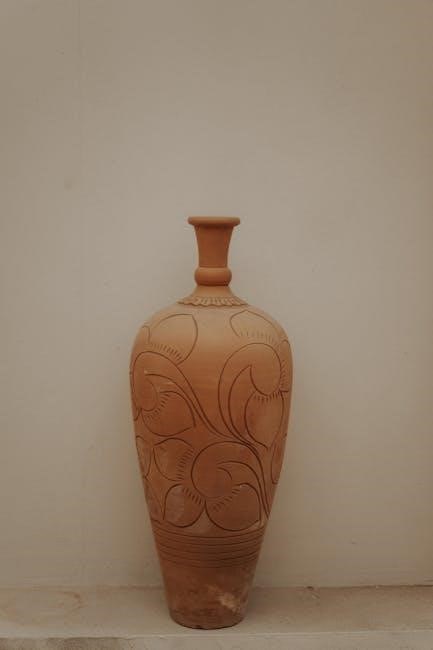
The Grecian urn within Keats’ poem transcends a mere object; it embodies art’s enduring power and the tension between transient life and eternal beauty. The PDF versions of the poem allow close examination of how Keats uses the urn to explore these concepts. It represents a frozen moment in time, a captured ideal, prompting reflection on mortality.
Accessing the poem in PDF format aids in analyzing the urn’s symbolic weight – a vessel holding stories, desires, and unanswered questions. The urn’s stillness contrasts with human passion, highlighting art’s ability to immortalize fleeting experiences.
Availability of the Poem in PDF Format
Numerous online sources offer “Ode on a Grecian Urn” in PDF format, catering to diverse academic and personal needs. These digital versions facilitate easy access for study, annotation, and sharing. Reliable sources include university websites, online literary archives, and educational platforms providing free PDF downloads.
PDFs often include critical analyses and contextual information, enhancing comprehension. Students benefit from readily available, portable copies for research and classroom use. Accessibility features within PDF readers further support inclusive learning, making Keats’ masterpiece widely available.

Analyzing the Stanzas
Each stanza presents Keats’ evolving engagement with the urn’s scenes, exploring themes of beauty, truth, and mortality through vivid imagery and questioning.
Stanza I: Initial Encounter and Questions
The poem commences with an address to the Grecian urn, initiating a contemplative dialogue. Keats poses questions regarding the urn’s origins and the stories it depicts, captivated by its silent narratives. He wonders about the figures frozen in time – nymphs and gods – and their untold tales.
This initial encounter establishes the central tension between the static, eternal world of art and the fleeting, dynamic realm of human experience. The PDF format allows close reading of Keats’ carefully chosen language, revealing his immediate fascination and the mysteries the urn embodies. It’s a moment of pure aesthetic wonder and intellectual curiosity.
Stanza II: The Pursuit of Unattainable Beauty
This stanza focuses on the passionate pursuit of a lover attempting to kiss his beloved, a scene eternally captured on the urn. Keats explores the frustration of desire, as the lover’s bliss is perpetually on the verge of fulfillment, yet never achieved. The PDF version allows focused analysis of Keats’ evocative descriptions of longing and the tantalizing nature of unattainable beauty.
He contrasts this frozen moment with the transient nature of human passion, highlighting art’s power to preserve a fleeting ideal. The urn embodies a perfect, yet ultimately inaccessible, form of love and joy.
Stanza III: Frustration and the Power of Imagination
Keats grapples with the limitations of art and the frustration of not fully understanding the scenes depicted on the urn. He questions the story behind the figures, acknowledging the power of imagination to fill in the gaps. A PDF copy facilitates close reading of Keats’ rhetorical questions and introspective musings.
Despite the unanswered questions, the urn’s beauty transcends the need for complete comprehension, demonstrating art’s ability to evoke powerful emotions and stimulate the mind. The stanza emphasizes the subjective experience of viewing art.
Stanza IV: The Eternal Spring of the Urn
This stanza celebrates the urn’s enduring quality, depicting a scene of perpetual spring and joyous celebration. The figures on the urn are forever youthful and vibrant, untouched by time or decay. Accessing a PDF version allows for detailed examination of Keats’ vivid descriptions and the contrasting imagery of permanence and transience.
The “happy, happy boughs!” exemplify the urn’s ability to capture a moment of ideal beauty, frozen in time. Keats contrasts this eternal spring with the fleeting nature of human life, highlighting art’s power to transcend mortality.
Stanza V: The Unheard Melody and Ideal Forms
The final stanza grapples with the urn’s paradoxical nature – its beauty evokes a powerful emotional response, yet remains silent and still. A PDF copy facilitates close reading of Keats’ exploration of this tension, revealing the poem’s complex philosophical undercurrents. The “unheard melody” symbolizes the unattainable ideal, forever present yet forever beyond reach.
Keats concludes that beauty and truth are intertwined, and the urn serves as a lasting testament to this profound connection, offering a glimpse into eternal forms.
Key Themes and Motifs
PDF analysis reveals central themes: art’s immortality, beauty’s truth, time’s passage, unfulfilled desire, and imagination’s power—all interwoven within Keats’ evocative verses.
Art and Immortality
PDF versions of Keats’ “Ode on a Grecian Urn” powerfully demonstrate art’s capacity to transcend time, offering a glimpse into enduring beauty. The urn itself embodies this concept, preserving scenes and figures eternally, unlike fleeting human life.
Keats contemplates how the depicted figures—lovers, musicians—exist in a perpetual “now,” untouched by aging or loss. This contrasts sharply with the mortal world, highlighting art’s unique ability to grant a form of immortality. Studying the poem in PDF format allows focused examination of these ideas, revealing how Keats elevates the urn to a symbol of lasting artistic achievement and timeless existence.
Beauty and Truth
Accessing “Ode on a Grecian Urn” in PDF format facilitates a deeper understanding of Keats’ exploration of beauty and truth’s intertwined nature. The poem’s central question – “Beauty is truth, truth beauty” – remains profoundly debated. Keats suggests these concepts aren’t easily defined, yet are fundamentally connected within artistic representation.
The urn’s sculpted forms offer an idealized beauty, prompting reflection on whether this aesthetic perfection reveals a deeper truth. Digital PDF study allows close textual analysis, revealing how Keats uses imagery and symbolism to challenge conventional notions of both beauty and truth, ultimately suggesting their inseparable bond.
Time and Eternity
Examining “Ode on a Grecian Urn” as a PDF document allows focused study on Keats’ contemplation of time’s passage versus art’s enduring quality. The urn, a static object, embodies eternity, contrasting sharply with the fleeting nature of human life and experience. Keats explores how art transcends temporal limitations, preserving moments and emotions indefinitely.

Through digital access, readers can meticulously analyze the poem’s structure and language, revealing how Keats juxtaposes the ephemeral with the eternal. The PDF format supports detailed annotation, aiding comprehension of this central theme and its implications for understanding art’s lasting power.
Desire and Fulfillment
A PDF version of Keats’ “Ode on a Grecian Urn” facilitates close reading of his exploration of unattainable desire and the illusion of fulfillment. The figures on the urn represent idealized beauty and perpetual longing, forever poised on the brink of satisfaction but never achieving it. Keats contemplates the frustration inherent in pursuing desires that remain perpetually out of reach.
Digital study allows focused analysis of how Keats uses imagery and symbolism to convey this tension. The poem suggests that true fulfillment may lie not in possessing desire’s object, but in the imaginative experience itself, readily accessible through detailed PDF annotation.
The Role of Imagination
Accessing “Ode on a Grecian Urn” in PDF format encourages a deeper engagement with Keats’ emphasis on the power of imagination. The poem isn’t about definitively knowing the urn’s stories, but about the imaginative leaps the speaker takes to construct narratives around the depicted scenes. A digital copy allows for highlighting and annotating these imaginative flights.
Keats suggests imagination transcends the limitations of time and mortality, offering a pathway to experience beauty and truth. Studying the poem via PDF enables focused analysis of how Keats’ language evokes sensory experiences and fosters imaginative participation.

Poetic Devices and Techniques
Analyzing a PDF version reveals Keats’ masterful use of imagery, allusion, and apostrophe; these techniques heighten the poem’s emotional resonance and artistic depth.
Imagery and Symbolism
Examining the poem in PDF format allows focused study of Keats’ rich imagery and potent symbolism. The urn itself embodies art’s enduring quality, contrasting with human mortality. Vivid depictions – the figures, trees, and melodies – stimulate the imagination.
These aren’t merely decorative; they represent idealized beauty and unattainable desires. The “unheard melodies” symbolize the limitations of sensory experience and art’s power to evoke emotion. A PDF facilitates close reading, revealing how each image contributes to the poem’s central themes of truth, beauty, and eternity. Careful annotation within a PDF reader enhances this analytical process.
Allusion and Mythology
A PDF version of “Ode on a Grecian Urn” aids in tracing Keats’ skillful allusions to classical mythology. The poem references figures and scenes rooted in ancient Greek art and stories, enriching its layers of meaning. Understanding these references – the gods, rituals, and narratives – is crucial for interpretation.
Digital study via PDF allows easy cross-referencing with mythological sources. Keats doesn’t simply retell myths; he uses them to explore universal themes of love, loss, and the human condition. Annotating a PDF with mythological context deepens appreciation for the poem’s intellectual and artistic complexity.
Apostrophe and Personification
Analyzing a PDF of “Ode on a Grecian Urn” reveals Keats’ masterful use of apostrophe – directly addressing the urn as “O Attic shape!” This technique personifies the inanimate object, granting it a voice and presence. The urn becomes a confidante, a source of wisdom, and a vessel for eternal truths.
A digital PDF facilitates close reading to identify instances where Keats imbues the figures depicted on the urn with human qualities. He imagines their stories, their emotions, and their desires. This personification elevates the artwork beyond mere representation, transforming it into a living, breathing world.
Sound Devices: Assonance and Consonance
A PDF version of Keats’ “Ode on a Grecian Urn” allows focused study of its rich soundscape. Keats employs assonance – the repetition of vowel sounds – like in “pale lament,” creating a melancholic tone. Consonance, the repetition of consonant sounds, as in “soft pipes,” adds texture and musicality.
Examining the poem digitally highlights how these devices contribute to its overall aesthetic effect. The careful arrangement of sounds mirrors the visual harmony of the urn itself. These techniques, readily apparent in a PDF, enhance the poem’s emotional resonance and immersive quality, solidifying its enduring power.
Keatsian Sensuousness
A PDF of “Ode on a Grecian Urn” facilitates a deep dive into Keats’ hallmark – his sensuousness. He vividly appeals to all five senses, describing sights, sounds, and even implied textures. The poem isn’t merely about beauty; it is a beautiful sensory experience, best appreciated through close reading enabled by digital access.
The PDF format allows for annotation, highlighting phrases like “cool-rooted blooms” and “warm-blooded” that exemplify this quality. Keats’ ability to evoke tactile and emotional responses is central to the poem’s impact, making it a cornerstone of Romantic literature.

Critical Interpretations
PDF versions of the poem unlock diverse analyses – Romantic, psychoanalytic, and feminist – offering varied perspectives on Keats’ masterpiece and its enduring themes.
Romantic Era Perspectives
PDF access to “Ode on a Grecian Urn” facilitates understanding its place within Romanticism, a movement valuing imagination and emotion. Scholars, through digitized texts, analyze Keats’ exploration of beauty, truth, and mortality—core Romantic concerns. The poem’s focus on ideal forms and the power of art aligns with Romantic ideals, contrasting with Enlightenment rationalism.
Digital resources allow detailed examination of Keats’ sensuous imagery and his yearning for transcendence, central to the Romantic aesthetic. PDF annotations often highlight allusions to classical mythology, a frequent source of inspiration for Romantic poets. Studying the poem in PDF format enhances comprehension of its historical and artistic context within the Romantic period.
Psychoanalytic Readings
PDF versions of Keats’ “Ode on a Grecian Urn” enable psychoanalytic interpretations focusing on repressed desires and unconscious motivations. Critics explore the poem’s imagery—particularly the pursuit of unattainable beauty—through Freudian lenses, suggesting themes of longing and frustration. The urn’s frozen figures represent idealized objects of desire, reflecting unresolved conflicts.

Digital access allows close textual analysis, revealing symbolic representations of the id, ego, and superego. Scholars examine Keats’ ambivalent attitude towards the urn, interpreting it as a projection of his own internal struggles. PDF study aids often present these complex interpretations, enriching understanding of the poem’s psychological depth.
Feminist Interpretations
PDF access to “Ode on a Grecian Urn” facilitates feminist critiques examining the poem’s portrayal of women and gender dynamics. Scholars analyze the silent, objectified female figures depicted on the urn, questioning their agency and representation within a patriarchal framework. The poem’s focus on male gaze and desire is central to these readings.
Digital resources allow for comparative analysis of Keats’ work with other Romantic texts, revealing prevailing societal attitudes towards women. PDF study guides often include feminist perspectives, highlighting the poem’s limitations and potential for reinterpretation through a gendered lens, challenging traditional critical approaches.
The Poem’s Influence and Legacy
PDF versions of the ode demonstrate its enduring impact on poetry, art, and literature, inspiring countless works and continuing to resonate with modern readers.
Impact on Subsequent Poetry
The accessibility of “Ode on a Grecian Urn” in PDF format has undeniably fueled its influence on generations of poets. Its exploration of beauty, truth, and mortality served as a cornerstone for Victorian and Modernist verse.
Poets responded to Keats’s complex meditations on art and time, often mirroring his use of vivid imagery and philosophical questioning within their own works. The poem’s formal structure and rich language became models for aspiring writers, readily available for study through digital copies.
Furthermore, the PDF format allows for easy annotation and comparative analysis, fostering a deeper understanding of its poetic lineage and lasting legacy.
References in Art and Literature
The widespread availability of “Ode on a Grecian Urn” in PDF format has amplified its presence beyond poetry, inspiring numerous allusions in art and literature. Visual artists have directly referenced the urn’s imagery, recreating its scenes and exploring its themes of idealized beauty and frozen time.
Novelists and playwrights frequently employ Keats’s central questions about art’s permanence versus life’s transience, often using the poem as an intertextual touchstone. The ease of access provided by PDF versions encourages these creative engagements, allowing artists to readily revisit and reinterpret Keats’s masterpiece.
Modern Relevance of the Themes
Despite being written in 1819, the themes explored in “Ode on a Grecian Urn” – readily accessible through PDF versions – remain strikingly relevant today. The poem’s contemplation of art’s enduring power resonates in our image-saturated culture, prompting questions about authenticity and permanence.
The tension between idealized beauty and human imperfection continues to fuel artistic and philosophical debate. The poem’s exploration of desire, fulfillment, and the limitations of human experience speaks to contemporary anxieties about meaning and purpose, making the PDF a valuable resource.
Finding and Utilizing PDF Versions
Numerous online sources offer “Ode on a Grecian Urn” in PDF format, ideal for academic study, annotation, and convenient access to Keats’ masterpiece.
Reliable Sources for PDF Downloads
Locating trustworthy PDF versions of Keats’ “Ode on a Grecian Urn” is crucial for accurate study. Reputable online literary archives, such as Project Gutenberg and Bartleby, frequently host verified texts in portable document format; University websites offering course materials often provide downloadable PDFs with scholarly introductions and annotations.
Additionally, digital libraries like the Internet Archive contain scanned copies of classic poetry collections, including editions featuring the ode. Always prioritize sources with clear publication details and avoid websites of questionable authority to ensure text fidelity and avoid potential copyright infringements. Checking for consistent formatting and accurate line breaks confirms a reliable PDF.
PDFs for Academic Study
For rigorous academic engagement with Keats’ “Ode on a Grecian Urn,” seek PDFs offering supplementary materials. Many university-hosted resources include critical essays, contextual analyses, and detailed annotations directly within the document. These versions often feature line numbers for precise referencing during research and essay writing.
Look for PDFs accompanying scholarly articles on JSTOR or Project MUSE, providing access to the poem alongside expert interpretations. Digital editions with integrated hyperlinks to relevant historical or mythological allusions enhance understanding. Prioritize PDFs from academic presses or peer-reviewed sources for reliability.
PDFs with Annotations and Commentary
Enhance your understanding of “Ode on a Grecian Urn” with PDFs featuring insightful annotations and commentary. These resources often dissect Keats’ complex language, explaining allusions to classical mythology and historical context. Look for editions that provide line-by-line analysis, exploring poetic devices like imagery and symbolism.
Annotated PDFs can illuminate the poem’s thematic layers – art, beauty, truth, and mortality – offering diverse critical perspectives. Student study guides in PDF format frequently include detailed notes and discussion questions, fostering deeper engagement with the text. Prioritize versions from reputable educational sources.
Accessibility Features in PDF Readers
When studying “Ode on a Grecian Urn” in PDF format, leverage accessibility features for an optimal experience. Modern PDF readers, like Adobe Acrobat or Foxit, offer text-to-speech functionality, aiding comprehension for visual impairments. Adjustable font sizes and styles cater to individual reading preferences.
Reflowable text options ensure comfortable reading on various screen sizes. Screen reader compatibility allows full access for visually impaired students. Utilizing these features enhances inclusivity and promotes a deeper engagement with Keats’ poetic masterpiece, regardless of learning style or ability.

Further Research Resources
Explore online databases, scholarly articles (JSTOR, Project MUSE), and Keats’ biographies to deepen understanding of the poem and its enduring critical reception.
Online Databases and Archives
Numerous online resources facilitate in-depth study of Keats’ “Ode on a Grecian Urn.” Accessing digitized texts and scholarly articles is now remarkably convenient. Platforms like JSTOR and Project MUSE offer peer-reviewed analyses, providing diverse critical perspectives on the poem’s themes and historical context.
Furthermore, digital archives, often maintained by universities and libraries, house original manuscripts and early editions, offering valuable insights into the poem’s evolution. Searching for “Ode on a Grecian Urn” within these databases yields a wealth of information, supporting comprehensive research and a nuanced understanding of Keats’ masterpiece. PDF versions are frequently available for download.
Scholarly Articles on JSTOR and Project MUSE
JSTOR and Project MUSE are invaluable resources for accessing rigorous academic analyses of Keats’ “Ode on a Grecian Urn.” These databases host a multitude of scholarly articles exploring the poem’s complex themes – art, beauty, truth, and mortality – through varied critical lenses.
Researchers can find interpretations ranging from Romantic era perspectives to psychoanalytic and feminist readings. Many articles offer downloadable PDF versions, facilitating convenient study. These platforms provide essential context, enhancing understanding of the poem’s enduring legacy and its place within literary history, offering detailed textual analysis.
Biographies of John Keats
Understanding John Keats’ life profoundly enriches the reading of “Ode on a Grecian Urn.” Comprehensive biographies, often available as downloadable PDFs through online booksellers or academic libraries, illuminate the poet’s personal experiences and intellectual influences.
Exploring Keats’ struggles with illness, his artistic development, and his Romantic sensibilities provides crucial context for interpreting the poem’s themes of beauty, mortality, and the power of imagination. These biographical resources offer insights into the creative forces shaping his masterpiece, deepening appreciation for its enduring impact.
Companion Websites and Study Guides
Numerous online resources complement the study of “Ode on a Grecian Urn,” with many offering downloadable PDF study guides. These websites provide detailed analyses of the poem’s stanzas, key themes, and poetic devices, aiding comprehension and critical thinking.
Look for sites offering contextual information, historical background, and scholarly interpretations. Many include interactive elements, quizzes, and essay prompts. Accessing these resources in PDF format allows for offline study and annotation, enhancing the learning experience and facilitating deeper engagement with Keats’ work.