fisher and paykel fridge manual

Fisher & Paykel Fridge Manual: A Comprehensive Guide

This manual provides detailed instructions for Fisher & Paykel refrigerators, covering model numbers, troubleshooting, ActiveSmart™ features, and maintenance procedures for optimal performance.
Understanding Your Fisher & Paykel Refrigerator
Fisher & Paykel refrigerators are known for their innovative design and advanced features, particularly the ActiveSmart™ technology. Before operating your appliance, familiarize yourself with its components and functionalities. This section will guide you through the basics, ensuring efficient operation and longevity.
Understanding where to locate your refrigerator’s model and serial number is crucial for registration, warranty claims, and accessing specific support resources. These numbers are essential when contacting Fisher & Paykel support or ordering replacement parts. Proper identification allows for accurate assistance and ensures you receive the correct information for your specific refrigerator model.
Locating the Model and Serial Number
Finding your Fisher & Paykel refrigerator’s model and serial numbers is essential for support, warranty, and parts ordering. These identifiers uniquely define your appliance. Knowing their location saves time when seeking assistance.
American fridge freezers typically have the label located towards the bottom right of the refrigerator’s interior; Carefully inspect this area. The label contains vital information, including the model number, serial number, and other technical specifications. Keep this information readily available for future reference, ensuring a smooth experience with your appliance’s maintenance and support.
Where to Find the Model Number

The model number for your Fisher & Paykel refrigerator is a crucial piece of information for identifying your specific appliance. Typically, on American fridge freezers, you’ll locate this number on a label situated on the lower right-hand side within the refrigerator compartment.
Carefully examine this area; the label will clearly display the model number alongside the serial number. Recording this number is vital when contacting customer support, ordering replacement parts, or referencing the appliance in any documentation. Having it handy streamlines the process and ensures accurate assistance.
Where to Find the Serial Number
Locating the serial number of your Fisher & Paykel refrigerator is just as important as finding the model number. Like the model number, the serial number is generally found on a label inside the refrigerator compartment, typically on the lower right-hand side for American fridge freezers.
This unique identifier helps track your appliance’s manufacturing date and warranty information. It’s essential when requesting service or verifying warranty coverage. Ensure you record both the model and serial numbers together for easy access. This information will be requested by Fisher & Paykel support for efficient assistance.
Common Fisher & Paykel Fridge Issues & Troubleshooting
Fisher & Paykel refrigerators, while reliable, can occasionally experience issues. Common problems include inconsistent temperatures, often due to door seals or control settings. Ice maker malfunctions are also frequent, potentially stemming from water supply issues or a faulty ice maker component.
Before contacting support, check the temperature settings and ensure the condenser coils are clean. For ice maker problems, verify the water line is connected and not frozen. This section will guide you through basic troubleshooting steps to resolve these common issues, potentially saving you time and service costs.
Temperature Control Problems

Temperature inconsistencies within your Fisher & Paykel fridge often indicate a few key issues. First, verify the temperature settings haven’t been accidentally adjusted. Next, inspect the door seals for any gaps, as warm air infiltration impacts cooling. A dirty condenser coil restricts airflow, causing temperature fluctuations.
Ensure items aren’t blocking vents inside the refrigerator. If the problem persists, run a diagnostic test (refer to your model’s specific instructions). Avoid overcrowding the fridge, allowing for proper air circulation. Consistent monitoring with a thermometer is recommended to identify and address temperature control problems promptly.
Ice Maker Malfunctions
Ice maker issues in your Fisher & Paykel refrigerator can stem from several causes. First, confirm the ice maker is switched ‘on’ within the fridge settings. Check the water supply line for kinks or freezing – adequate water pressure is crucial. A clogged water filter restricts water flow, hindering ice production.
Inspect the ice bin for obstructions or a full capacity. If ice clumps form, it may indicate infrequent use or temperature fluctuations. A faulty ice maker module might require professional repair. Regularly cleaning the ice maker components prevents buildup and ensures optimal functionality.
Fisher & Paykel ActiveSmart™ Technology Explained
Fisher & Paykel’s ActiveSmart™ technology utilizes intelligent sensors and independent cooling systems to maintain optimal temperatures within your refrigerator. This system adapts to daily use patterns, minimizing energy consumption and preserving food freshness for longer periods; ActiveSmart™ features include fast freeze options and precise temperature control, ensuring consistent cooling throughout the appliance.
The technology dynamically adjusts cooling based on usage, reducing temperature fluctuations. This proactive approach extends food life and lowers energy bills. Understanding ActiveSmart™ enhances your fridge’s efficiency and maximizes food preservation capabilities.
ActiveSmart™ Features and Benefits
ActiveSmart™ offers several key benefits, including significantly reduced energy consumption due to its adaptive cooling. This technology learns your usage habits, optimizing performance and minimizing temperature fluctuations. Features like rapid cooling and freezing ensure food stays fresher for extended periods, reducing waste and saving money.
Furthermore, ActiveSmart™ maintains consistent temperatures throughout the refrigerator, preventing spoilage. The independent cooling zones contribute to optimal humidity levels for various food types. Enjoy quieter operation and a longer lifespan for your appliance with this innovative system.
Understanding the Variable Temperature Zones
Fisher & Paykel refrigerators often feature variable temperature zones designed to preserve food optimally. These zones allow you to customize the temperature settings for specific compartments, like the deli drawer or freezer. Lower temperatures are ideal for meats and fish, while slightly warmer settings suit fruits and vegetables.
Adjusting these zones ensures proper humidity levels, preventing dehydration or premature spoilage. Utilizing these features extends the shelf life of your groceries and maintains their flavor and texture. Refer to your model’s specific manual for detailed zone temperature recommendations.
Cleaning and Maintenance
Regular cleaning is crucial for maintaining your Fisher & Paykel refrigerator’s performance and hygiene. Unplug the appliance before cleaning. For interior surfaces, use a mild detergent and warm water solution, avoiding abrasive cleaners. Wipe down shelves, drawers, and door bins thoroughly.
The exterior can be cleaned with a damp cloth and stainless steel cleaner (if applicable). Pay attention to door seals, ensuring they are clean and free of debris. Consistent maintenance prevents odors, extends the fridge’s lifespan, and ensures food safety. Always dry all components before reassembling.
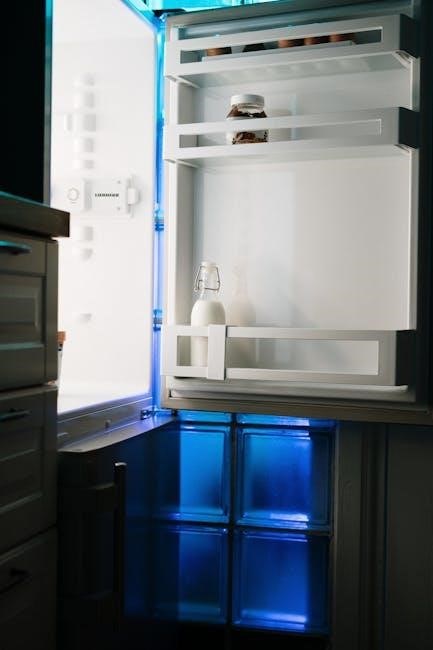
Interior Cleaning Procedures
Begin by removing all food items from the refrigerator. Then, take out removable shelves, drawers, and bins. Wash these components with warm water and a mild dish soap; Avoid abrasive cleaners, as they can damage surfaces. For stubborn stains, create a paste of baking soda and water.
Wipe down the interior walls and ceiling with the soapy water solution, paying attention to spills. Rinse thoroughly with clean water and dry all surfaces with a soft cloth. Reassemble the components and return food items, ensuring proper air circulation.
Exterior Cleaning and Care
To maintain your Fisher & Paykel refrigerator’s appearance, regularly clean the exterior surfaces. Use a soft cloth dampened with warm water and mild dish soap. Stainless steel models benefit from stainless steel cleaners, applied with the grain to avoid streaks.
Avoid abrasive cleaners or scouring pads, which can scratch the finish. Wipe down door handles frequently, as they accumulate fingerprints. For plastic surfaces, a general-purpose cleaner is suitable. After cleaning, dry the exterior thoroughly with a clean, soft cloth to prevent water spots and maintain a polished look.
Door Seals and Gaskets
Properly functioning door seals are crucial for maintaining refrigerator temperature and energy efficiency. Regularly inspect the door gaskets for cracks, tears, or gaps. A simple test involves closing the door on a piece of paper; if it slides out easily, the seal may be compromised.
Clean the gaskets with warm, soapy water to remove any debris that might prevent a tight seal. If the gasket is damaged or doesn’t create a firm seal, it requires replacement to prevent cold air leakage and ensure optimal refrigerator performance.
Checking for Proper Seal

To verify the integrity of your Fisher & Paykel refrigerator’s door seals, perform a straightforward paper test. Close the refrigerator door on a sheet of paper – ensure a portion remains visible. Gently attempt to pull the paper out. If the paper slides out with minimal resistance, this indicates a weak seal at that specific point.
Repeat this test around the entire perimeter of both the refrigerator and freezer doors. Pay close attention to corners and areas where the gasket may be worn. A consistent, firm grip on the paper signifies a proper, airtight seal, essential for efficient cooling.
Replacing Door Seals
If a door seal fails the paper test, replacement is necessary. First, disconnect the refrigerator from the power supply. Gently remove the old gasket by starting at a corner and carefully pulling it free from the refrigerator frame – it may be held in place by clips or adhesive.
Clean the frame thoroughly before installing the new seal. Align the new gasket with the frame, pressing it firmly into place, ensuring all clips are secured. Reconnect the power and re-test the seal with the paper method to confirm a proper, airtight fit.
Water Filter Replacement
Maintaining a fresh water filter is crucial for optimal fridge performance and water quality. Begin by identifying your specific filter type – often located inside the fridge compartment, typically at the top right. Before replacement, shut off the water supply to the refrigerator.

Remove the old filter by twisting or pressing the release button, depending on the model. Install the new filter, aligning it correctly and twisting or clicking it into place. Flush the system by dispensing several gallons of water to remove any air or debris. Regular replacement, every six months, is recommended.
Identifying Your Water Filter Type
Fisher & Paykel refrigerators utilize various water filter types, so correct identification is essential. Typically, the filter location is within the fridge compartment, often at the upper right corner. Examine the existing filter – its shape and size will provide initial clues.
Consult your refrigerator’s user manual or the sticker located near the filter housing; it will specify the exact filter model number. Common types include cartridge filters and inline filters. Knowing your model number ensures you purchase a compatible replacement, guaranteeing proper filtration and preventing leaks.
Step-by-Step Replacement Guide
First, turn off the ice maker and water dispenser. Locate the water filter, usually in the upper-right fridge corner. Gently rotate the existing filter counterclockwise to release it, and pull it straight out – have a towel ready for drips!
Remove the protective caps from the new filter and lubricate the O-rings with water. Align the new filter with the housing and push it in firmly, then rotate clockwise to lock it into place. Flush the system by dispensing several gallons of water. Reset the filter indicator light, if applicable, following your model’s instructions.
Defrosting Your Fisher & Paykel Fridge
Most Fisher & Paykel refrigerators feature an automatic defrost system, preventing ice buildup without manual intervention. However, if you have an older model requiring manual defrosting, unplug the fridge and remove all food items. Place towels inside to absorb melting ice.
Leave the door open for several hours, or use a hairdryer (on a low setting, carefully!) to accelerate the process. Once defrosted, clean the interior thoroughly, dry it completely, and plug the fridge back in. Allow it to reach the proper temperature before restocking with food.

Automatic Defrost Systems
Fisher & Paykel refrigerators equipped with automatic defrost systems utilize a timer and a heating element to periodically melt any frost accumulation. This process happens without requiring you to manually switch the fridge off or remove food. The melted frost drains through a designated channel, preventing ice buildup on the evaporator coils.
These systems operate efficiently, maintaining optimal cooling performance and preventing energy waste. You’ll typically notice the fridge running slightly cooler during the defrost cycle. No intervention is needed; the system handles everything automatically, ensuring consistent temperature control.
Manual Defrosting Instructions (if applicable)
If your Fisher & Paykel refrigerator model requires manual defrosting – typically older models – begin by disconnecting the appliance from the power supply. Remove all food items and store them appropriately. Place towels or containers at the base of the fridge to collect melting water. Leave the door open to accelerate the process.
Avoid using sharp objects to chip away at ice, as this can damage the interior. Once all ice has melted, thoroughly dry the interior with a clean cloth. Finally, reconnect the refrigerator to the power and allow it to reach the desired temperature before restocking with food.
Error Codes and What They Mean

Fisher & Paykel refrigerators utilize error codes to signal malfunctions, aiding in diagnosis and repair. These codes appear on the display panel, indicating issues ranging from temperature sensor failures to ice maker problems. A common code, “E1,” often signifies a temperature sensor error, requiring professional inspection. “E2” might indicate an issue with the defrost system.
Consult your specific model’s manual for a complete list and detailed explanations. Ignoring error codes can lead to further damage. If an error persists after attempting basic troubleshooting, contacting Fisher & Paykel support is recommended.
Common Error Code List
Fisher & Paykel refrigerators display various error codes. “E1” typically indicates a faulty temperature sensor, potentially affecting cooling. “E2” often signals a defrost system malfunction, leading to ice buildup. “E3” may point to a fan motor issue, impacting air circulation. “E4” can signify a water supply problem for the ice maker.
“E5” frequently relates to a communication error within the system. Always refer to your model’s specific manual for a comprehensive list, as codes vary. Note that these are general interpretations; professional diagnosis is crucial for accurate repair.
Troubleshooting Based on Error Codes

If your Fisher & Paykel fridge displays “E1”, check the temperature sensor wiring and replace if faulty. For “E2”, inspect the defrost heater and timer. “E3” requires examining the fan motor for obstructions or replacement. “E4” involves verifying the water line connection and filter.
“E5” often needs a technician to diagnose communication board issues. Always disconnect power before attempting repairs. Consult the full manual for detailed steps. If unsure, contact Fisher & Paykel support for professional assistance to avoid further damage or safety hazards.
Fisher & Paykel Refrigerator Parts & Support
Finding replacement parts for your Fisher & Paykel fridge can be done through authorized retailers or directly via the Fisher & Paykel website, using your model number. Common parts include water filters, door seals, and shelves. For expert assistance, Fisher & Paykel offers comprehensive support via phone, online chat, and a detailed FAQ section.
Their website provides access to manuals, warranty information, and a service request form. Ensure you have your fridge’s serial number ready when contacting support for efficient service and accurate part identification.
Finding Replacement Parts
Replacement parts for your Fisher & Paykel refrigerator are readily available through authorized retailers, appliance parts websites, and directly from Fisher & Paykel’s official online store. Having your appliance’s model number is crucial for ensuring compatibility. Common parts sought include water filters, door seals (gaskets), shelves, drawers, and ice maker components.
When ordering, verify the part number and description carefully. Fisher & Paykel also provides exploded diagrams to help identify the correct component. Always prioritize genuine Fisher & Paykel parts to maintain performance and warranty validity.
Contacting Fisher & Paykel Support
Fisher & Paykel offers comprehensive customer support through various channels. For immediate assistance, their dedicated support website provides FAQs, troubleshooting guides, and access to user manuals. You can also reach them via phone during business hours; check the official website for current contact numbers specific to your region.
Email support is another option, allowing you to detail your issue and receive a response from a qualified technician. Fisher & Paykel’s website also features a live chat function for real-time assistance. Be prepared to provide your appliance’s model and serial number when contacting support.